Garage Storage Should Follow Frequency of Use, Not Container Size
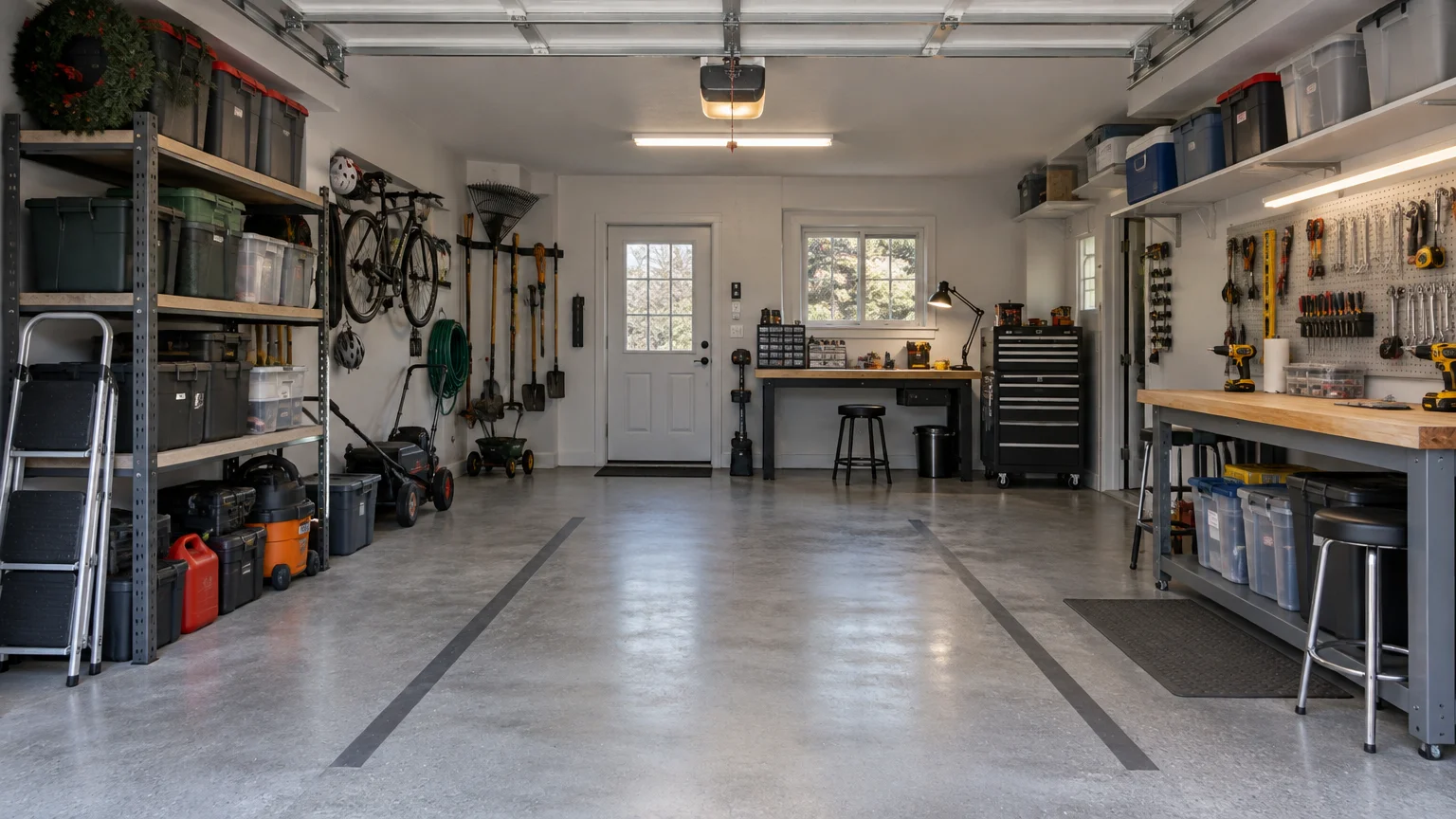
A garage storage organization system should begin with movement, not containers. Protect the vehicle footprint, garage-door operating area, walking route and access to utilities first. Then give every retained item a zone based on how often it is used, where it is used and how safely it can be stored.
This order prevents a familiar failure: buying shelves and matching bins, filling them by size and discovering that frequently used gear is buried behind holiday decorations. A durable system puts daily and weekly equipment within easy reach, heavy items low and occasional lightweight items higher.
Mark the space that storage cannot occupy
Park the vehicle where it normally sits and open every door, including the hatch or tailgate. Walk the usual route between the vehicle, house door and driveway. Use painter’s tape to mark the space that must remain clear.
Repeat the exercise around the garage door. Account for the door panels, tracks, springs, opener rail, emergency release and wall controls. Storage must not interfere with moving equipment or prevent inspection and maintenance. The exact clearances depend on the installed system, so check its manuals rather than relying on a universal measurement. Regularly reviewing the system also makes it easier to spot developing problems; see this guide to residential garage-door inspection and service intervals.
Also mark electrical panels, outlets, plumbing shutoffs, water heaters, HVAC equipment and other utilities that require access. If the garage contains a refrigerator or freezer, include its door swing and manufacturer-specified ventilation space. ENERGY STAR recommends allowing air circulation behind a refrigerator and consulting its manual for use and cleaning instructions.
Sort the inventory before designing the system
Pull items into broad groups before deciding where shelves or rails belong. For each item, choose one action: discard, donate, recycle, relocate indoors or retain in the garage. There is little value in building permanent storage around empty paint cans, broken tools or sports equipment nobody uses.
Divide the retained inventory into functional categories:
- Daily: shoes, pet supplies, reusable bags, bicycle helmets and other items used most days.
- Weekly: hand tools, chargers, sports gear, car-washing supplies and frequently used yard equipment.
- Automotive: fluids, detailing tools, tire equipment, recovery gear and vehicle-specific parts.
- Yard: long-handled tools, trimmers, hoses and soil-working tools.
- Sports: balls, rackets, folding chairs, bicycles and protective equipment.
- Seasonal: holiday decorations, fans, heaters and weather-specific recreation gear.
- Archive and household overflow: records, keepsakes and seldom-used household goods that are actually suitable for garage conditions.
- Hazardous products: paints, cleaners, oils, batteries, pesticides and similar products requiring label-directed storage and disposal.
Do not combine categories merely because their objects fit in the same tote. The point of zoning is to make an item’s location predictable without opening three unrelated containers.
Build garage storage zones around frequency and function
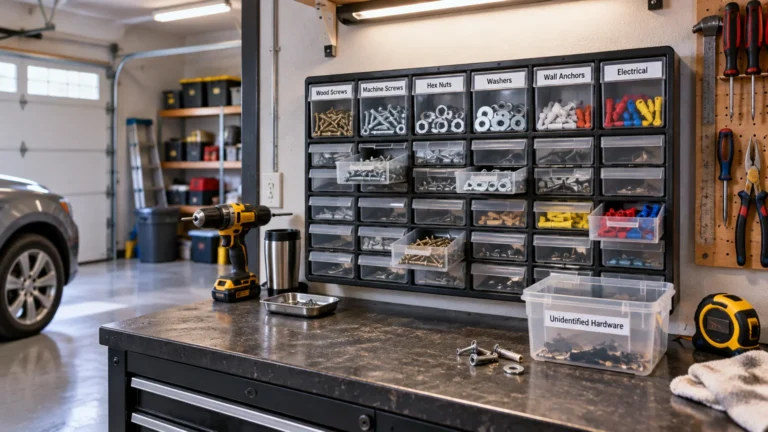
Start with the most valuable wall space: the area reached without moving a vehicle, ladder or other stored equipment. Assign it to daily and weekly items. Hooks, shallow shelves and clearly divided drawers work well here because contents remain visible and easy to return.
Place function-specific zones near the point of use. Yard tools belong near the yard-facing exit when possible. Sports equipment works best near the side of the vehicle where it is loaded. Automotive tools and supplies should stay near the workbench or parking bay without narrowing the walking route.
Match the storage hardware to the item
| Storage type | Best use | Main advantage | Watch for |
|---|---|---|---|
| Open shelving | Frequently used bins, bulky supplies and visible inventory | Fast access and easy stock checks | Clutter, dust and objects projecting into walking space |
| Wall rails and hooks | Long-handled tools, hoses, bicycles and awkward equipment | Uses vertical space while keeping the floor open | Correct fasteners, rated capacity and secure engagement of hooks |
| Closed cabinets | Tools and supplies that benefit from separation or dust control | Reduces visual clutter and limits casual access | Door swing, cabinet stability and product-specific storage restrictions |
| Lidded bins | Seasonal goods, sports accessories and household overflow | Keeps small related items together | Hidden contents, excessive stacking and containers becoming too heavy |
| Drawer organizers | Hand tools, drill bits, fasteners and small repeat-use parts | Makes missing items obvious and speeds up cleanup | Overloaded drawers and mixed categories |
| Overhead racks | Lightweight, low-use seasonal items | Preserves working wall and floor space | Mounting requirements, load limits and interference with doors, openers or vehicles |
Treat every stated load capacity as product-specific. Follow the rack manufacturer’s mounting, loading and inspection instructions, including its requirements for wall or ceiling structure and fasteners. The CPSC has warned consumers to stop using one specific wall-mounted storage-rack product after reports of collapse, buckling and weld failure. That warning does not apply to every rack, but it illustrates why damaged, loose or unstable storage hardware should not remain in service.
Storage installation can also change how light reaches a workbench or vehicle. Tall cabinets and overhead racks may create shadows even when the garage has bright fixtures. Plan storage and garage lighting placement together rather than treating them as separate projects.
Handle hazardous products as a separate system
Paint, cleaners, oils, batteries and pesticides are not ordinary bin inventory. The EPA classifies products such as these as household hazardous waste and advises following their labels for storage and disposal. It also recommends keeping products in their original labeled containers, never transferring them to food containers and never mixing leftover products. The EPA’s household hazardous waste guidance explains these precautions and directs homeowners to local or state agencies for collection and disposal options.
Create a distinct hazardous-products zone only after reading every product label and checking applicable local requirements. Do not pour unknown liquids together, hide leaking containers in a larger tote or keep mystery bottles. If a product cannot be identified or safely retained, contact the appropriate local household hazardous-waste program rather than improvising a disposal method.
Use labels as operating hardware
A label should answer two questions quickly: what belongs here, and where should it be returned? Label shelves and zones as well as containers. A bin marked “sports” is vague; labels such as “baseball,” “swim gear” and “bike spares” are easier for everyone in the household to follow.
Apply the same logic to tool drawers, battery chargers, cords, vehicle supplies and seasonal shelves. Use large, readable wording and place it where it remains visible when bins are stacked. For dirty or frequently handled surfaces, choose a label material suited to the container and environment. Homeowners setting up repeatable bin, drawer and equipment identification can order durable labels for garage storage and equipment.
Color can reinforce the wording, but it should not replace it. A simple scheme might use one color each for automotive, yard, sports and seasonal storage. Written labels remain understandable to visitors and household members who do not remember the color code.
A worked one-car-garage layout
Consider a one-car garage containing a vehicle, workbench, mower, sports equipment, household bins and several hazardous products. Begin by taping out the parked vehicle, open doors, garage-door path and walking route to the house.
Put the workbench on a wall where a person can stand at it without blocking the vehicle route. Give the wall above or beside it shallow tool storage, with heavy portable tools below bench height. Store yard equipment near the exterior exit, using properly mounted hooks for long-handled tools and a defined floor position for the mower.
Place sports gear near the vehicle’s loading side. Helmets and frequently used bags go at easy reach; loose balls and small accessories go in labeled containers. Put lightweight holiday decorations and other seasonal goods on higher shelving, provided that the shelving is correctly installed and the containers can be handled safely.
Keep archive bins together in the least convenient suitable location instead of mixing them through active zones. Establish the hazardous-products area separately according to each product label and local requirements. The result is not necessarily more storage capacity, but it is a much faster and more predictable garage to use.
Adjust the plan to the garage’s main job
In a vehicle-first garage, preserve door-opening space, loading access and a direct route around the car before assigning walls. In a workshop-first garage, protect the workbench, material-handling path, lighting and outlets. A tandem garage often benefits from keeping daily equipment near the front and seasonal storage farther back, provided emergency and utility access remains clear.
A two-car garage should not automatically split storage evenly between both sides. Put the most frequently used zone near the household’s normal entry and loading pattern. The quieter wall can hold seasonal or archive storage. Let actual movement determine the layout rather than forcing visual symmetry.
Build the system one wall at a time
Finish one wall before buying hardware for the entire garage. Tape out operating space, sort the items assigned to that wall and choose storage based on weight, shape and access frequency. Install only hardware appropriate for the structure and follow the product instructions. Load it gradually, inspect for movement or deflection and label every repeatable category.
Schedule a reset when the seasons change. Return misplaced items, remove waste, inspect racks and hooks, and move the next season’s equipment into the accessible zone. A useful garage storage organization system is not the one with the most containers. It is the one that lets people park, walk, work and put equipment away without rearranging the garage first.